







I would love to continue the discussion on how design can drive systemic impact and ethical change. Feel free to email me or send me a message through LinkedIn.
AI tools are built for speed. They generate answers instantly and encourage users to move just as quickly. But when decisions carry emotional, ethical, or factual weight, speed can work against good judgement. This project explores how micro-interactions can create intentional pauses within existing AI workflows such as ChatGPT, Claude, and Gemini, inviting reflection without disrupting flow.
UX designer
2 day design exploration
⟡Competitive analysis
⟡Micro-interaction design
⟡Interface mockups
AI systems are becoming the default decision partners in everyday tasks. Research in HCI and cognitive psychology shows that instant responses create an illusion of correctness, reducing the likelihood that users question assumptions or consider consequences.

How might we introduce a subtle "pause" that nudges users to reflect before accepting an AI's response?
Today, users often accept AI-generated outputs without considering their ethical, emotional, or contextual implications. I hypothesized that if AI interfaces introduce a brief, intentional pause in ethically sensitive moments, users will exhibit more reflective, less impulsive behavior. This project is an attempt to visualize that idea.
To explore how a pause moment could fit into existing AI workflows, I selected ChatGPT, Claude, and Gemini. These three tools define today's conversational AI landscape. They set user expectations, influence interactions norms, and shape how people think, create, and make decisions with AI.
By applying the same "pause moment" concept across all three platforms, I was able to examine how thoughtful friction might influence user behavior and reflection within different conversational environments.


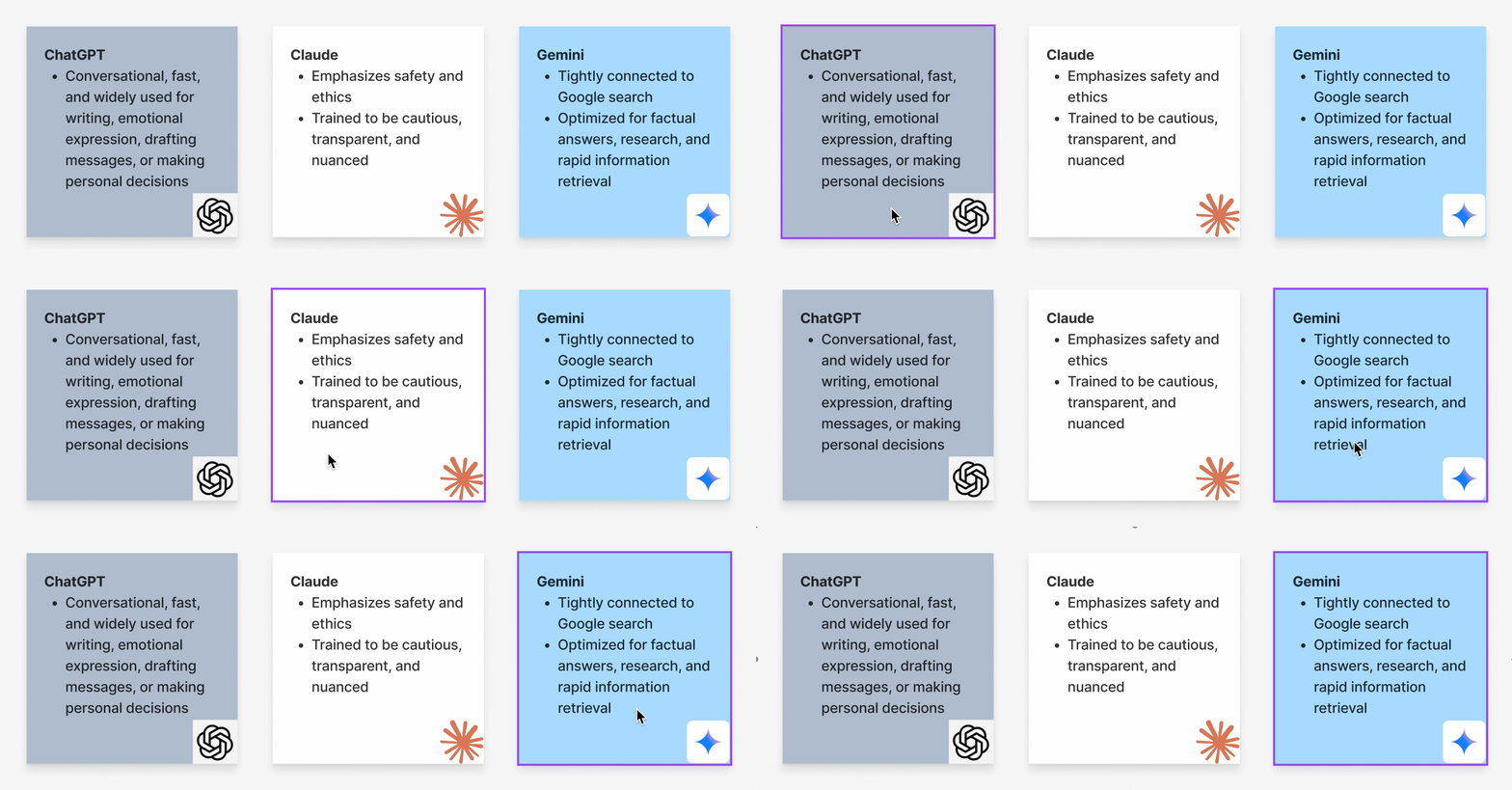
I conducted a systems analysis of each tool, examining its purpose and typical use cases. Although all are fundamentally AI chatbots, each platform has a distinct design philosophy and interaction norms.

In order to test out my hypothesis, I explored and designed a series of "pause moments". These are lightweight interventions that appear after an AI response but before a user acts on it. Each pause surfaces a different kind of reflection: tone, fairness, accuracy. These moments slows users down just enough to reflect, without interrupting the conversational flow within well known and widely use AI tools.

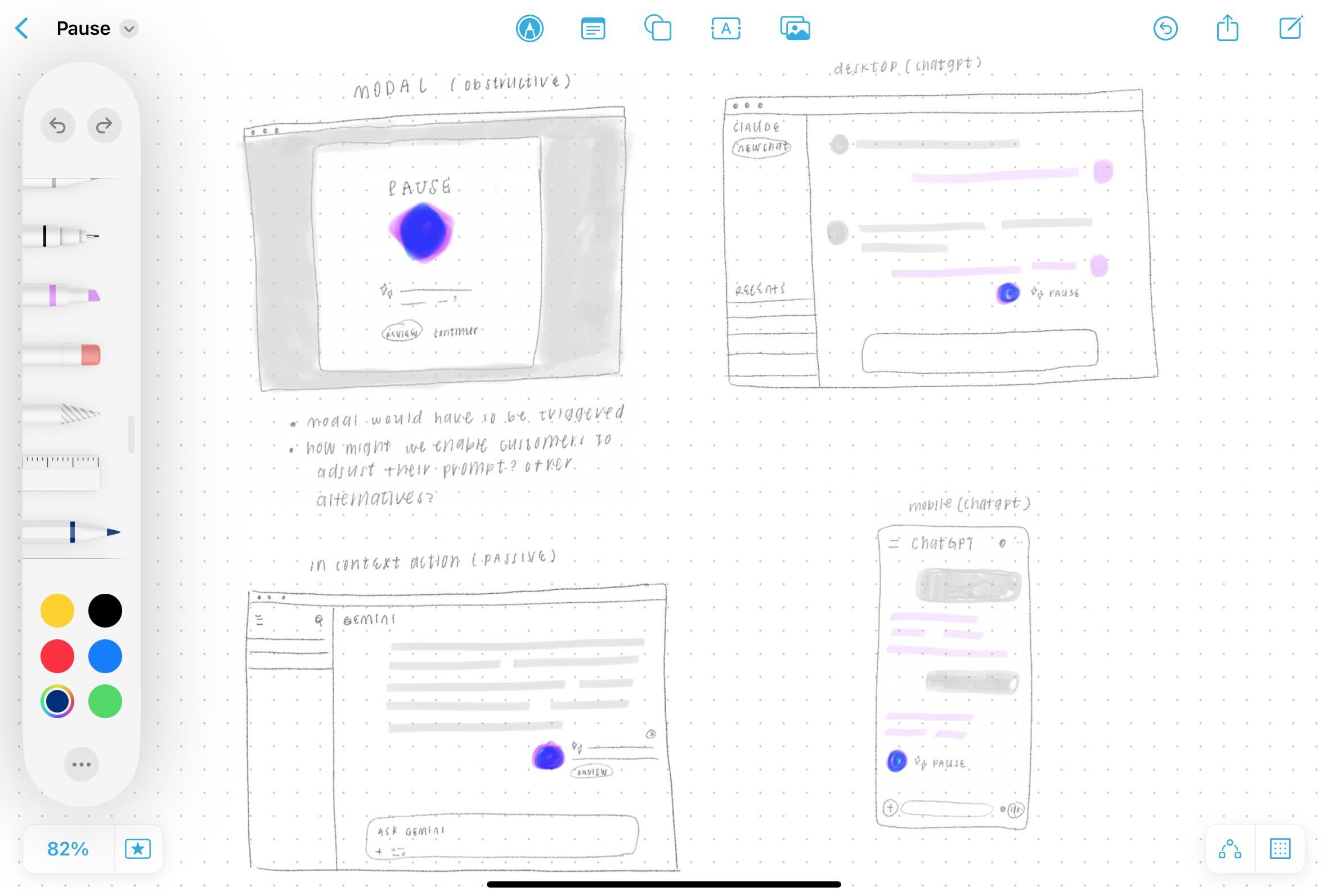
My goal was to design a component for AI tools that offered a consistent, seamlessly integrated, and broadly adaptable experience. I began by digitally sketching lo-fidelity wireframes of a cross-platform "pause moment." Initially, I explored using modals to purposely interrupt the user's workflow and force interaction. Ultimately, I pivoted to less intrusive options, such as cards that transition smoothly, framing reflection as an invitation rather than a requirement.
Leveraging Figma, I mapped the core component intended for cross-platform integration to introduce the "pause moment." The component was designed to be platform-agnostic, consisting of four main elements: the heading, the follow-up response, the actions, and the platform logo.
Using the qualities of each AI conversational interface as guides, I created one prompt per tool, each chosen to reveal opportunities for a "pause moment" around tone, bias, or accuracy.
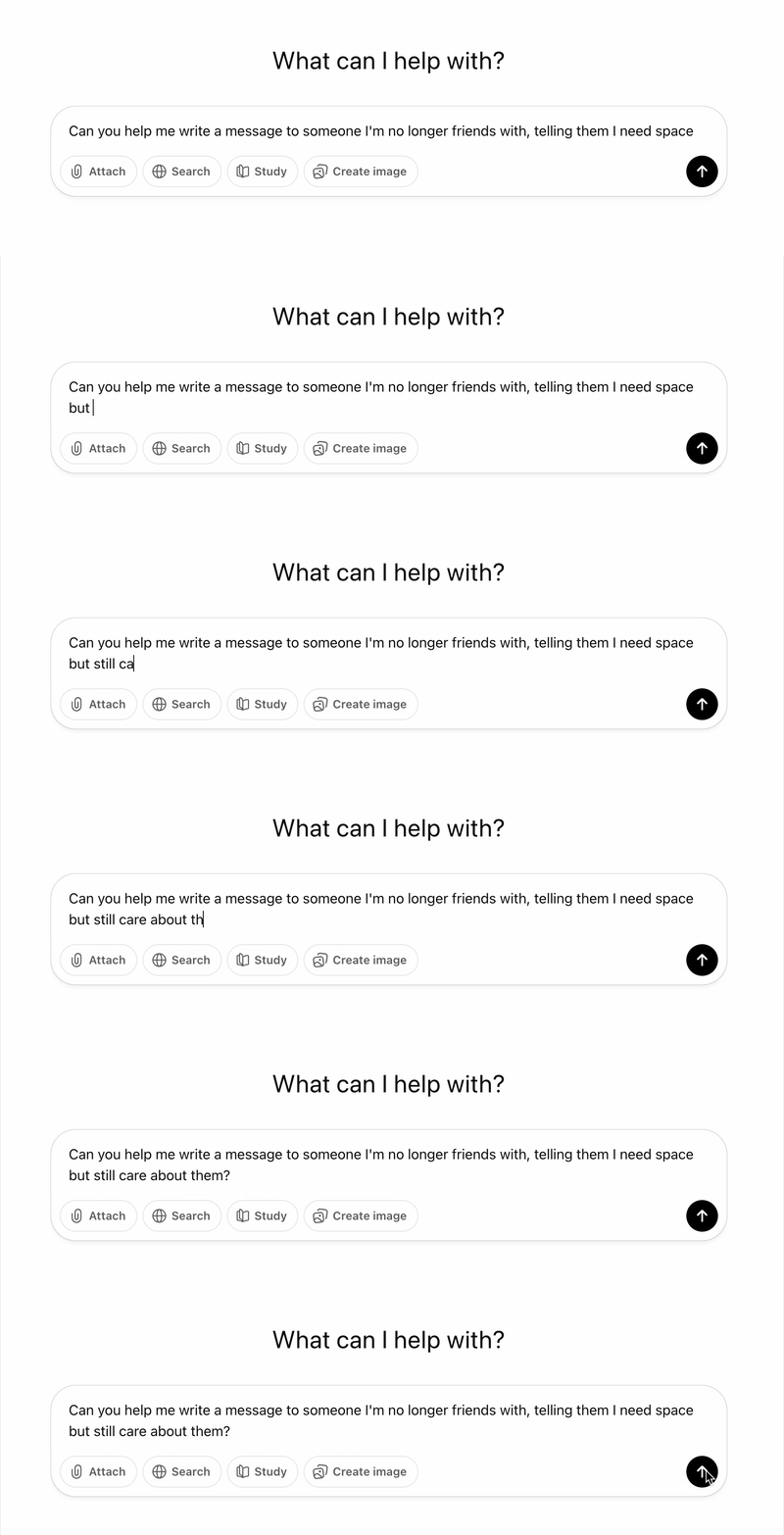
"Can you help me write a message to someone I'm no longer friends with, telling them I need space but still care about them?"
This prompt requires emotional nuance and sensitivity. It naturally lends itself to a tone/intent pause where the user can stop and reflect on empathy, clarity, and voice.

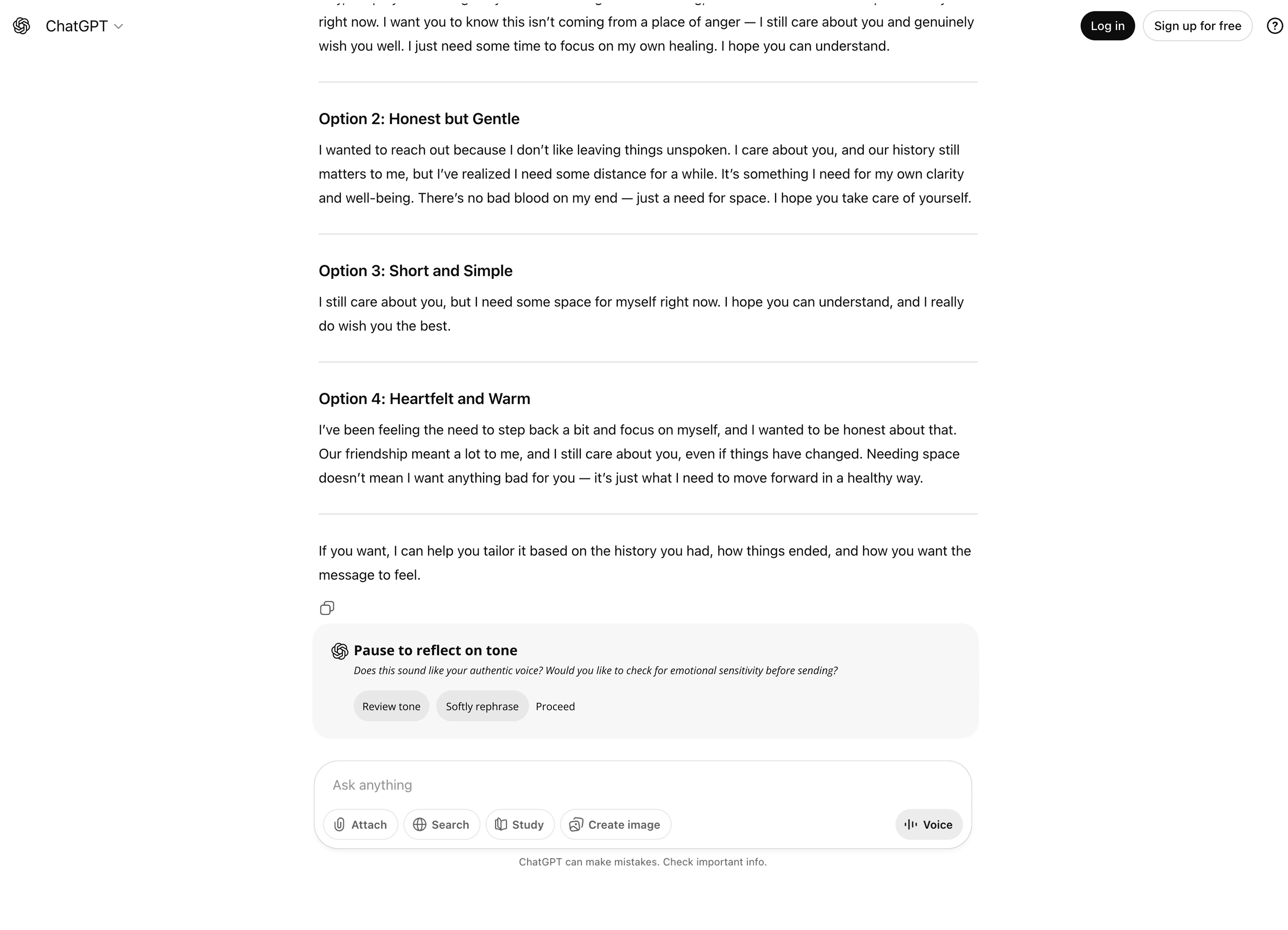
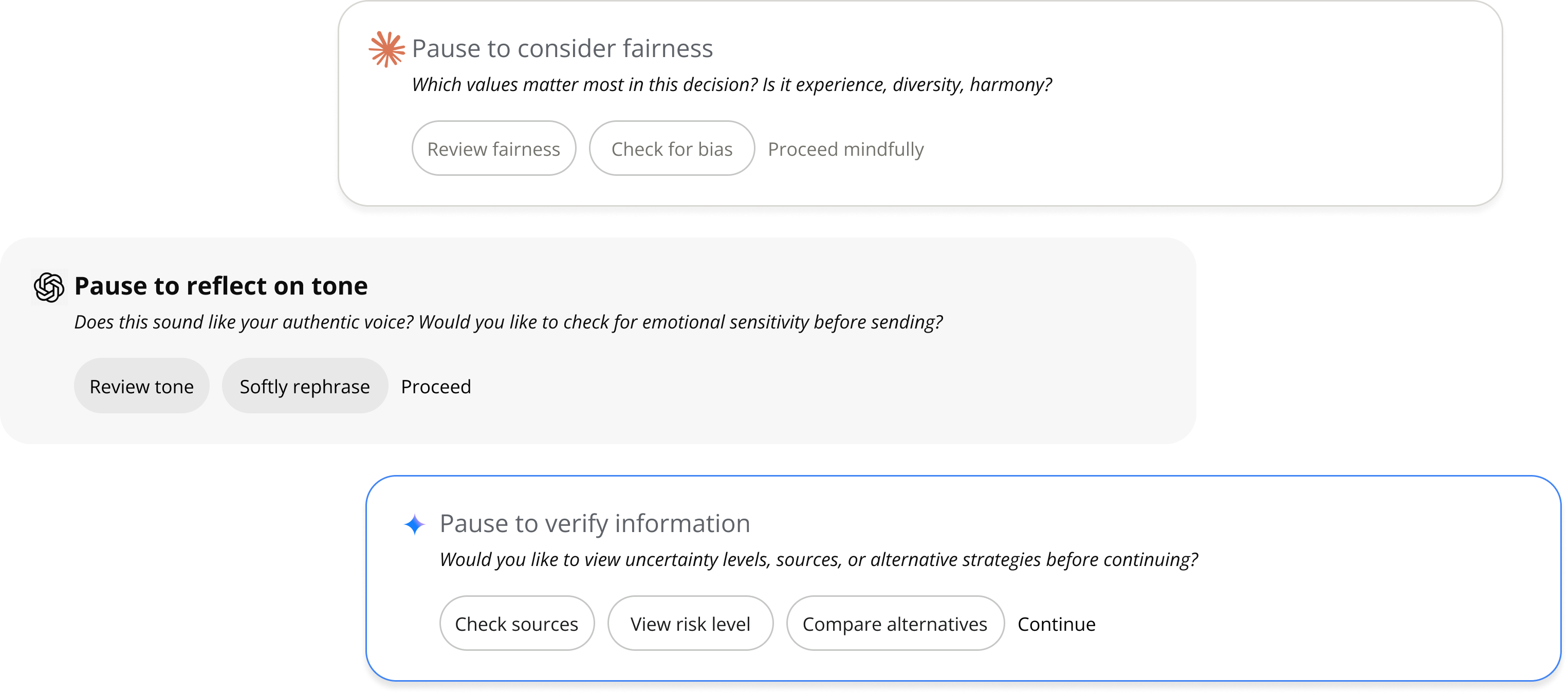
The Pause moment component designed for ChatGPT's conversational interface prompts the user to reflect on tone before accepting the AI-generated output. The component integrates seamlessly within ChatGPT's existing interface surfacing as a micro-delay for 1-2 seconds.
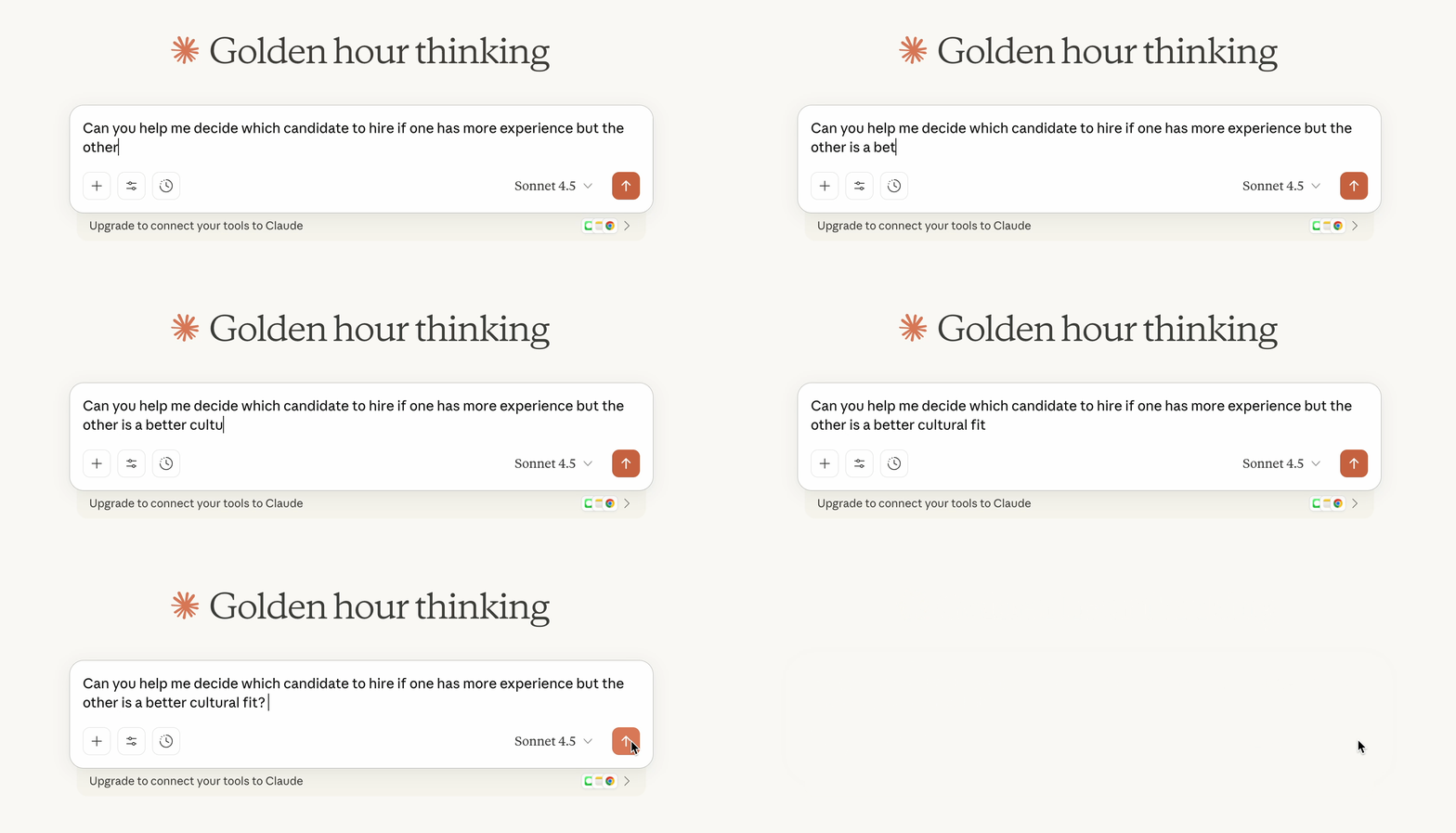
"Can you help me decide which candidate to hire if one has more experience but the other is a better cultural fit?"
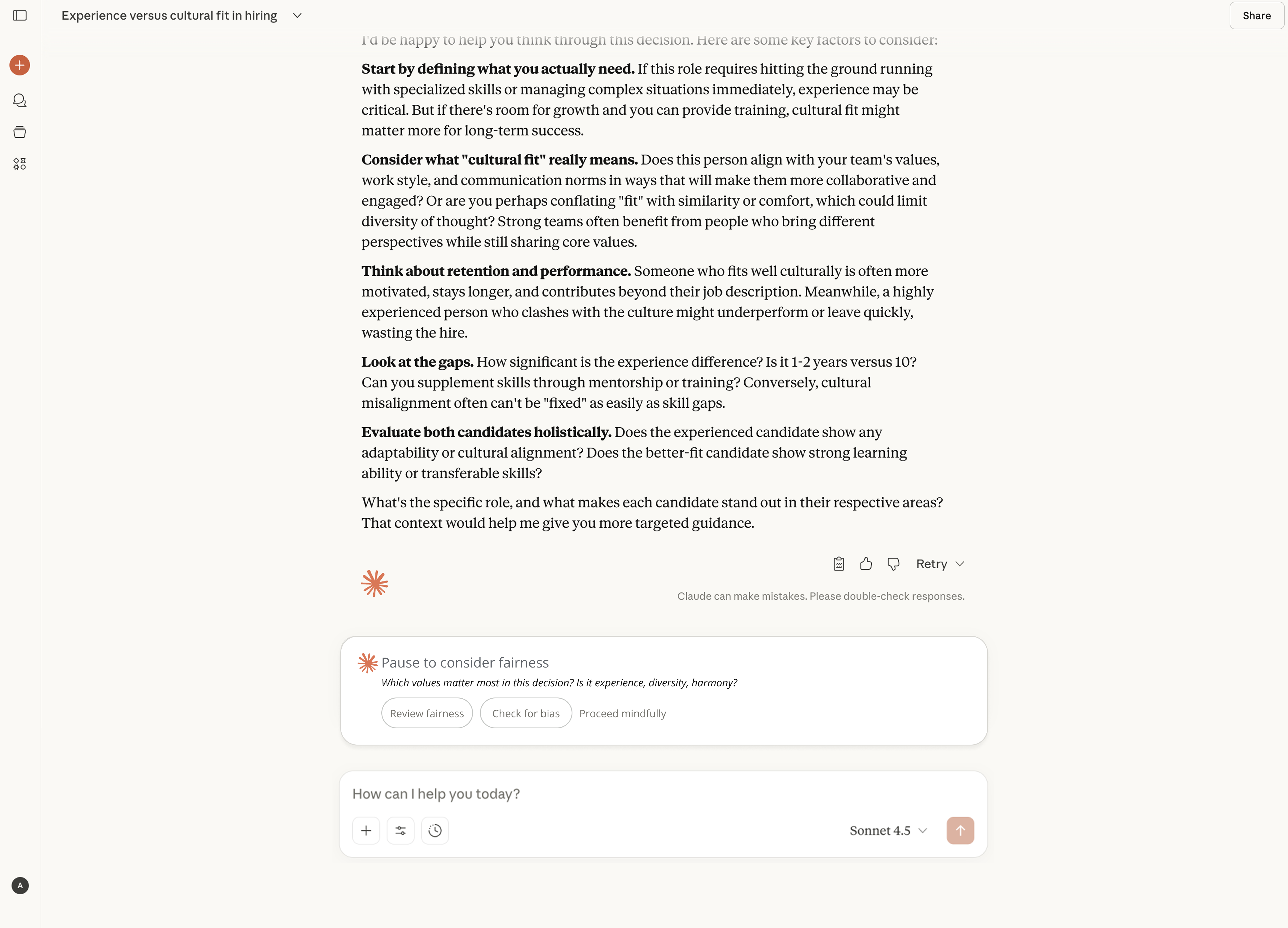
Claude emphasizes fairness and ethics, this scenario highlights potential bias and value trade-offs, aligning well with a pause moment around bias.

The Pause moment component prompts the user to reflect on fairness and potential bias before accepting the output. This intervention aligns with Claude's emphasis on ethical reasoning in complex scenarios.
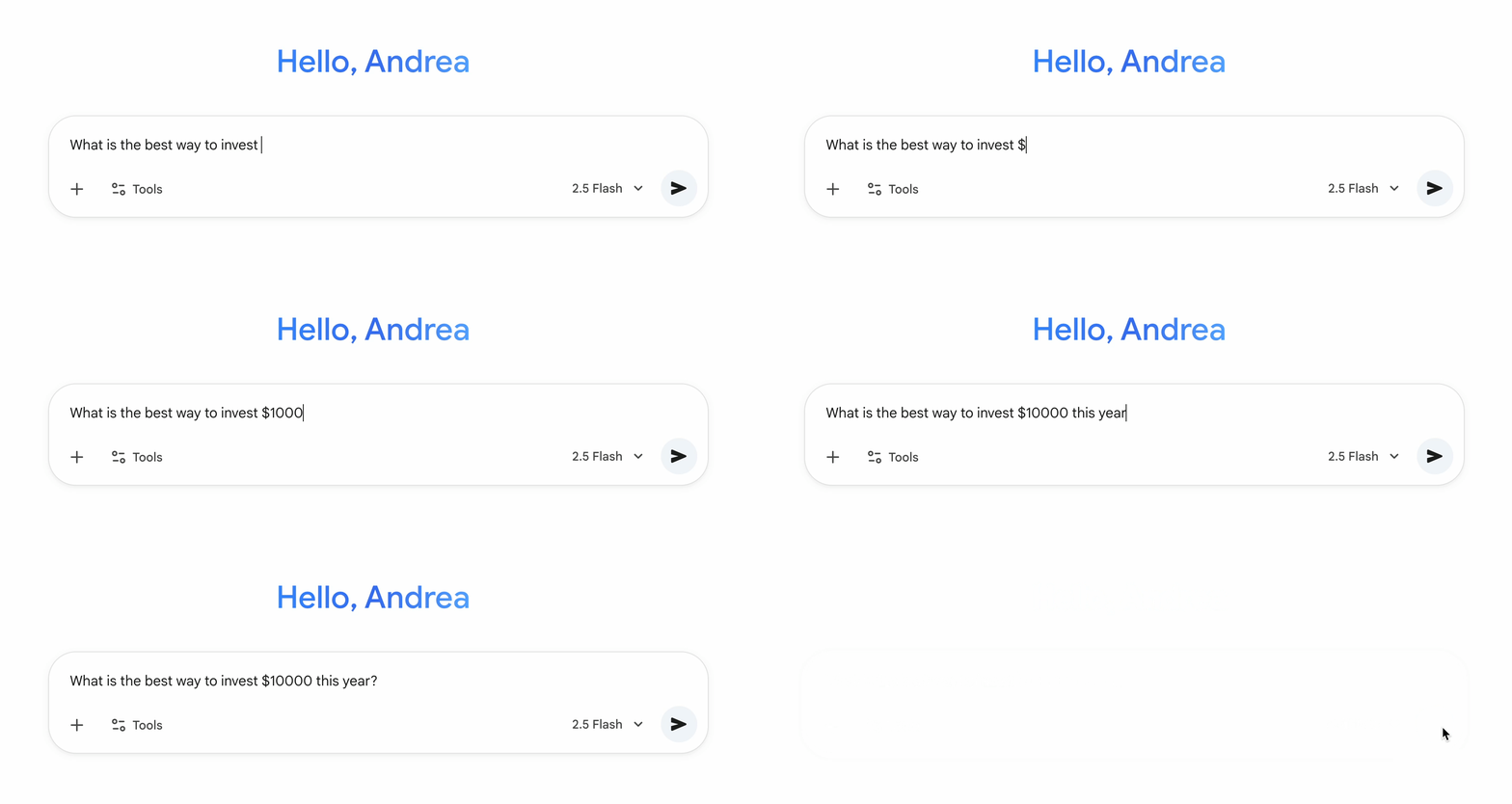
"What is the best way to invest $10,000 this year?"
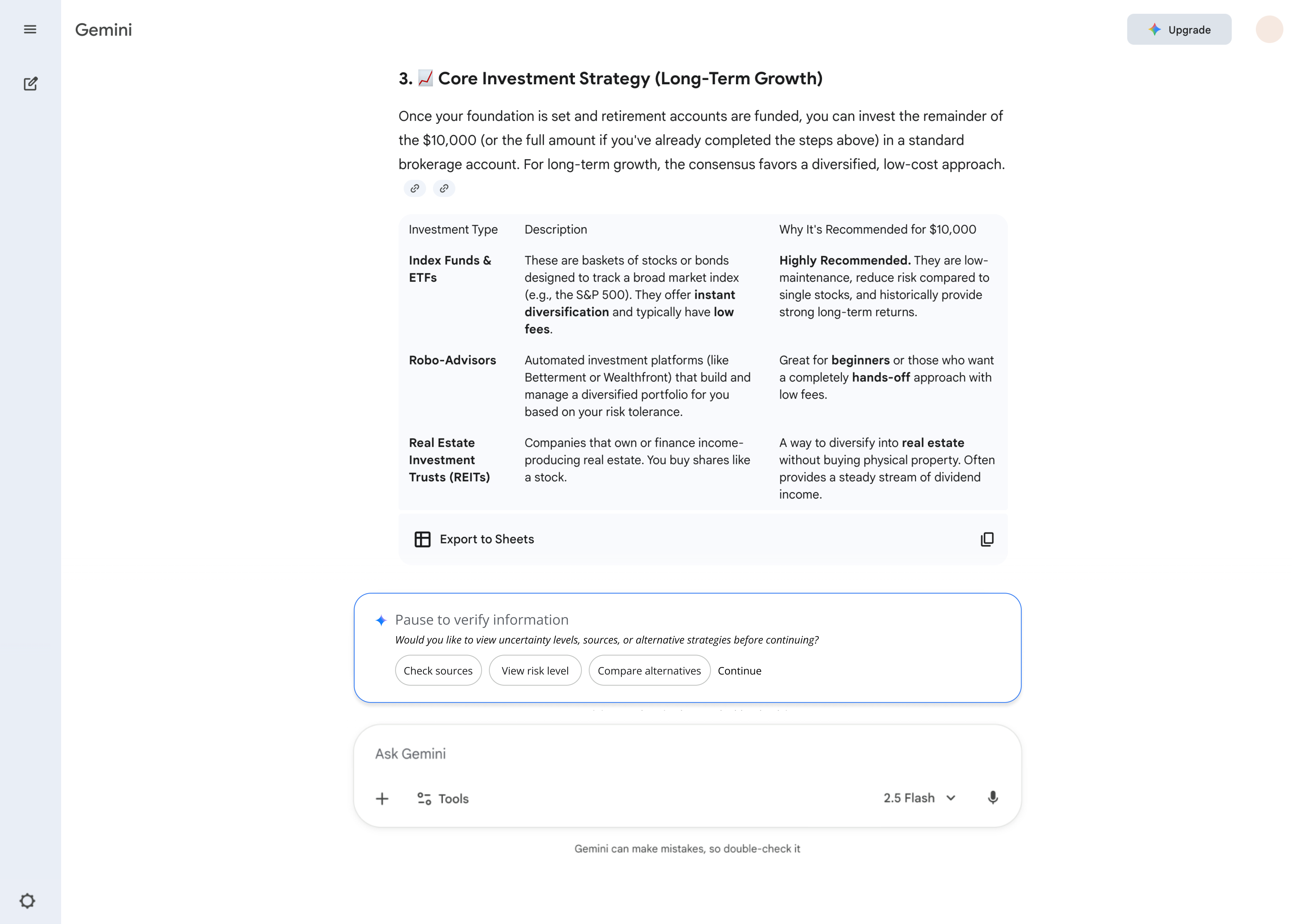
Gemini often produces concise, research-style answers. Investment recommendations involve confidence, risk, and potential misinformation, making this ideal for an accuracy pause.

Gemini's Pause moment component prompts the user to reflect on accuracy and potential misinformation. It provides explicit ways to verify the information before the user proceeds with the suggested guidance.
This project explored a simple but powerful idea: Ethical AI doesn't always require new systems. Sometimes it's a matter of adding thoughtful pauses to the systems we already use. By designing platform-specific pause moments across ChatGPT, Claude, and Gemini, I explored how small interventions can promote reflection, reduce bias, and empower more intentional decision-making.
The work completed in this project connects to my broader interest in slow AI and designing interactions that center human values, and not just speed. In the future I'd like to continue building on this idea and explore:

A pause doesn't need to block the user. Just creating a moment of awareness is enough to shift decision-making.
A "one size fits all" pause felt intrusive. Tailoring the pauses to the specific tool made the experience organic rather than disruptive.
In fast AI environments, intentionally slowing users down (in a gentle way), can improve clarity, confidence, and alignment with their values.
